This is why I’m marching on Saturday

Another school shooting.

I see the headline for a moment, then set my phone on the counter and wash the dishes in the sink. I fold a load of laundry and vacuum the carpet. I drink another cup of coffee. I don’t want to read the details.

I read the details.

I read the news report from the safety of my living room while my kids are at school taking math tests, playing on the playground and writing about wombats.

They are so far away from me.

I hope they don’t feel alone today.

I hope they eat the vegetables in their lunch.

I hope they remember to be kind.

I hope they are safe.

Each school shooting drives a nail deeper into my chest. The fear and trauma these kids, parents, and teachers endure are incomprehensible.

Enough is enough.

My son, who is 13, and his fellow classmates participated in the walkout last week. We had talked about the shooting at Parkland High School, me doing my best to protect him from the details, but I didn’t think he gave it much thought.

He did.

He knows what the lockdown drills at his school are about.

He feels the fear and the uneasiness.

He believes those 17 minutes he sat in silence mattered.

He believes change can happen.

He has hope.

He is why I will participate in the March For Our Lives at the State Capitol on Saturday. I march because he, and his fellow students across the country, believe their voices matter and change can happen.

And I believe in them.

I’ve been surprised by the number of people insulting and putting down the Parkland kids, the sheer volume of charts and graphs about how more kids die from car accidents than gunshot wounds, the rationalizing of school shootings as a result of parents not spanking kids and the countless other ways people wanting to hold onto their guns try and spin it.

This isn’t about you and your guns.

It’s about them and their right to feel safe.

This is their moment.

I will march because it’s one action I can take against the insanity.

I will march because the Parkland kids have taken their anger and grief and channeled it into activism and power.

I will march because I believe in these kids and the world they want to create.

I will march.

posterboard.png

*In case you missed it, please watch Lin-Manuel Miranda and Ben Platt singing a charity song they wrote called “Found/Tonight” to raise money for the March For Our Lives movement. Each download helps raise funds and awareness.

Writing prompt #3: The Pledge

Two weeks late and a bit meandering, I give you this short story I’m calling “The Pledge.”

I’d love to know what you think of the characters and if you’d read more. Thanks again to Angelica for the prompt.

Enjoy.

28577440_10211257411296641_774480305384849408_n

I push my bare feet into the familiarity of my cracked red cowboy boots. The dampness makes the worn leather grab them, so I have to pull hard. The sore muscles in my hands twitch in disagreement. It takes thirty seconds, but with his eyes on the back of me and the heavy stone returning to my gut, it’s like an endless looping moment.

Turning around, I see he is as I left him, laying on his back under the green sweeping branches of the old Willow Tree. He has slipped his brown corduroy pants back on, but his chest remains exposed and flushed. His bushy blonde hair and beard, thick legs and arms, give him the appearance of a resting lion. I blush remembering the hunt. He pats the ground next to him and I turn away.

“Don’t go yet,” he says.

His voice smoky and panting calls me back to our hidden spot and my body responds with natural instinct, a betrayal of my true intentions. The warring of my conscience, volleying back and forth, makes me sway in place for a moment. I kick a rock with the toe of my boot and watch it hit a boulder and break into uneven pieces. I don’t know if I can end this, or if I do, what will be left of me.

The rainclouds grow darker and fat drops fall onto my tangled red hair, bringing goosebumps spiraling from my neck to my arms and legs. The soft fabric of my favorite yellow sundress is plastered to my body, outlining its curving shape and my missing undergarments. The rock shifts in my stomach and I lean forward to avoid my boots as I release everything I’ve eaten in the last day on the mossy ground.

Shivering, I recite the “Pledge of Allegiance” in my head, my hand covering my heart in a motion so practiced it could not be restrained.

“I Pledge Allegiance to the Flag of the United States of America…”

In the moonlight, my father’s face looks as if it was carved from an elephant’s tusk, pale white and severe. There is a dark brown evening shadow of hair running in an almost straight line from his ears to his cheekbones, ending in a patch on his pointed chin. His eyebrows are pitched toward his nose in a deep scowl, making his blue eyes almost disappear into his wrinkled face. He spits a glob of foam onto the ground and twirls the hard, white ball in one hand.

I’m standing at the five-sided home plate in our backyard, holding the heavy wooden bat in my small hands. A tall, wispy girl of six, I’m dressed in jeans and a faded yellow t-shirt. My nails are thick with dirt from digging with the neighbor boy for worms near the creek behind our house. I concentrate on placing my weight on the balls of my feet and keeping a slight bend in my knees.

My father brings his arms together in front of his body,  pulling back and lifting one knee, he pitches the ball. Fear overcomes training, I close my eyes and freeze in place. The ball hits me hard on my side and I fall to the ground, tears coming faster than I can stop them. The bat rolls away and I gasp for air.

“Get up.”

He is snarling at me from his raised pitching mound, the anger hot between us. I wipe the tears with my hands, the dirt stinging my eyes. My lungs stab with pain, but I force myself to my feet and stumble toward the bat’s resting place a few feet away. When I bend to lift the bat, the pain makes me cry out. I turn to him, begging with my eyes for us to be done, but he doesn’t return the gaze. He walks toward me, retrieves the ball near my scuffed pink tennis shoes, and returns to his dirty throne.

“Again.”

I place my feet shoulder-width apart and hold the bat, making sure my index finger on the bottom hand is bent around but separate from the other fingers. I adjust the angle and keep my eye on the ball. Don’t look away. Don’t flinch.

“…And to the Republic for Which it Stands…”

Standing side by side, I try to stay in unison with my father’s deep voice as we say the pledge together. He pronounces each word sharp and crisp. When he finishes, he turns to me, tilting my ten-year-old face to his. He is wearing his dark blue army uniform, the special occasion one with the shiny gold buttons and the polished black boots. I don’t know if he is carrying his gun. He grabs both my hands in his.

“Never forget today.”

The seams of my white gloves press into my palms as he squeezes hard. We turn back toward the hole in the yard where Gretchen lay dead and stiff. Dad’s flannel shirt is laid across the lower part of her body and her favorite chew toy, a stuffed mallard with missing eyeballs, is placed in her paws as if she’s holding it. I’m scared she might move at any minute and lunge at me with her wild eyes and sharp teeth.

Dad stands at attention, and I do as well. I’m wearing a pleated yellow dress he ironed with starch and it itches, like bugs crawling on my stomach and chest. I look at the stand of beech trees near the back fence, yearning to play, and he grabs my chin, returning my gaze to the hole. Gretchen’s face is locked in a permanent growl and I swear I hear it rumbling out of her dead mouth. I shiver and squirm.

He slaps me across the face. My neck whips around and I fall to the ground, the smell of rotting dog making me gag. My face burns, my eyes refuse to focus and I puke, a dismal array of undigested oatmeal and orange juice. He pulls me to my feet, my white patent leather shoes scuffed with dirt, and screams into my face of disrespect and disappointment. I can’t see his face. I stammer an apology and return to his side. We stand at attention, the throbbing of my head making me sway, and say the pledge over and over as the stench of Gretchen’s body covers us.

“…One Nation under God…”

He holds my hand as we watch the casket, my father tucked inside, lowered into the ground. The sun is shining bright and the sky is electric blue and free of clouds. Sweat makes the black lace of my dress stick to my skin and drips streak the backs of my legs. I squint and cover my face with my free hand, pretending tears I can’t seem to force.

A soldier, young enough to have pimples on his chin, hands me a triangle of an American flag. It’s heavy in my arms and I resist the urge to throw it on the ground. All eyes are on us, the grieving couple. I’m about to say something when he makes a strangled cough which turns into a heaving sob, his bulky form shaking next to me. He sounds like a fish gasping for air. I keep my eyes on the hole in the ground.

My father and I met him at a car show. He was standing next to a bright red 1966 Ford F100. It had been his father’s truck and he was honoring his memory by showing it. He had long blonde hair pulled back into a neat ponytail and a trimmed blonde beard. He was dressed in a sandy brown suit, ironed creases along the center of the pant legs, and a soft yellow handkerchief folded with three points in the left breast pocket. His smile warmed my body. My dad was impressed and invited him to dinner at our house. We were married six months later, five days after my 18th birthday.

My father loved him, greeting him every time by gripping his arms and pulling him into a deep embrace. They never spoke harsh of each other, only of me. His sobs crescendo, his body wobbling back and forth as everyone watches. The light catches his wedding ring. I should pull it off his finger and throw it onto the casket.

He looks beautiful in his expensive Italian suit with its three round buttons, embroidered silk tie, and pale-yellow handkerchief. He’d polished his shoes for two hours this morning, but they look dull in the brightness of the noon sun. He goes silent and snaps his body to attention. His voice cracks as he leads everyone in saying the pledge my father lived. We all join in.

“…Indivisible, with Liberty and Justice for All.”

I spit the last strings of vomit on the ground and tilt my head back so the raindrops fall on my face. I close my eyes. The ground is slick and puddled under my boots. I should not have come to him again. He wipes my face with soft yellow fabric and folds me into his arms, the scent of him like pine forests and mud. His lips brush my neck, licking rainwater and warming the air. I look at my red leather boots and beg them to walk away.


Writing prompt #2

I’ve been working on my novel for several years, a task which involves writing the same paragraph seventeen times, scrapping it and then crying. I suppose there are other methods, but I like to suffer. Clearly.

As you can imagine, it’s not so fun. It’s work. Self-imposed work with no deadline or guarantee anything will come of it. Soul-feeding and soul-draining work.

Free writing, however, is as fun as I remembered. Letting a story flow, without edit and overthinking, is creative play and makes me feel giddy.

Here is my second free write with Reece Writing. Be sure to read her chilling take on the same prompt.

img_2684-1


Grandmother’s left side of her body is smaller than her right, giving her a lopsided gait and a frailty which compels strangers to want to open doors for her or offer her assistance. She refuses, giving the well-intentioned person a scolding look. This is followed by her story, unpacked in a measured tone, each word well-rehearsed and precise, trapping the would-be good-doer with her piercing black eyes.

We are at Save Mart picking up a cake for her 90th birthday party, a task she did not trust me to complete alone. A tired mother with a sleeping baby strapped to her chest in a colorful sling, and an excited toddler bellowing his ABCs while stacking groceries into towers inside the cart, makes the mistake of smiling at Grandmother and asking her if she needs anything.

Grandmother sits down on the cracked leather seat of her walker, taking a small box of tissues out of the flower print bag hanging from the metal bars, and sets it on her lap. She holds up her left hand, it looks like bones covered in blueish veins held together with greying tissue paper.

“I had Polio at five months old,” she begins.

Her voice is loud for someone so small and I see the woman’s look, the one they all give as she begins her story. Sympathy at first, perhaps even interest, but as she continues, it transforms into embarrassment and then a desperate desire to flee.

“My mother wept for the first five years of my life. She was heartbroken at the imperfection of her only child, this weak and disfigured girl who didn’t smile or speak. My father says my Polio is what killed my mother, but I know it was something more. I felt the truth the moment I was born, and I carry it still.”

If she can keep her audience, the story continues with her two marriages, one good and one bad, her ten children, eight surviving to adulthood, and the three-bedroom house she has lived in all her life. Few people stay for the entire story. If they do, it’s older women wearing long skirts or flowering dresses and they want to hug her after. Grandmother does not permit any kind of touching but will give them a tissue from the box. If they don’t leave, she will begin again.

The young mother doesn’t make it past the story of the first marriage. The toddler screeches and throws crackers at Grandmother as the newborn baby begins to wail and snuffle at her covered breasts. The poor woman apologizes and backs away. She appears shaken and I offer to help, but she’s moving fast away from us, headed toward the opposite side of the store.

“Here’s your cake.”

The woman behind the counter, a 20-something with bright blue eyes and a blond pony-tail high on the back of her head, smiles at us with the box open for our inspection. Grandmother stands and peers inside. It’s a vanilla cake in the shape of a house, frosted green with yellow shutters, and the number 90 written in gold icing on the front door.

“Perfect,” I say.

Grandmother turns to me and scowls, making a growling sound in the back of her throat, and walks toward the glass front doors of the store.

“Nothing’s perfect,” she calls. “Hurry up.”

I thank the woman and pay, balancing the cake in my arms to find Grandmother sitting behind the wheel of her pale blue 1970s Cadillac. The windows are rolled down and her walker sits on the curb next to the car. I set the cake on the back seat, fold up her walker and place it into the cavernous trunk.

“You move like a sloth,” she calls. “You better hold the cake on your lap.”

I retrieve the cake and take my seat, expecting her to slam on the gas, but instead, she’s frozen. Her hands are gripping the steering wheel, making the knuckle bones look as if they will pop through her papery skin. She is staring at a middle-aged man, plain and a bit pudgy, getting out of the white Ford sedan next to us. He returns her stare, glaring with deep-set grey eyes. I recognize the look, but don’t want to.

“No,” I whisper.

“No choice,” she says.

“It’s your birthday Grandmother, and everyone is waiting at the house for us. We could ignore it.”

“Get my walker.”

“Grandmother…”

She stares at me, her black eyes burning and I blush from shame.

“Now.”

I return the cake to the backseat and get her walker. The man is standing at the cake counter by the time we get inside, unaware of what is to come. I wish I was. He is talking to the same girl we got our cake from and she is blushing and giggling in excess. She likes him.

He is wearing faded denim jeans, a button-up grey shirt, and plain brown shoes. His sandy blonde hair is balding in the back, and he has a small trimmed mustache. Grandmother walks over to him and touches him on the arm with her left hand. He flinches and glares at her. I see it flash across his face so transparent I wonder why he’s never been caught.

“Can I help you?”

He is trying to recover, his voice sugary and sweet, but the fear is making him tremble and his temples are wet with sweat. He smirks at Grandmother, the telling grin of a confident hunter, and my stomach burns with acid. Patience, I tell myself.

“I’m wondering if you can help me,” Grandmother says.

“Oh…umm…sure.”

He is staring at the blond girl, her name tag says Angela, and I wonder if she’ll ever know how close she came to death.

“I’ll be right back,” he says.

He touches Angela’s forearm with a finger, a tickling swipe to mark her, and she blushes. How long has he been planning today? How many cakes has he bought in preparation? She giggles at some joke he whispers, and I feel nauseous and sleepy. Grandmother’s voice wakes me.

“I need help getting something out of my trunk,” she says. “It’s too big for my granddaughter and me to handle, but you look strong.”

Her syrupy voice, the one she uses for this purpose, awakens the calling inside me and I find the stillness. My training takes over. I beam at him, making myself smaller and more attractive. I sway my hips as I step into place next to him, placing my arm onto his, steadying him. I stare into those dim eyes, past the monster, to the prey. He blinks and wipes the sweat from his forehead.

“Oh, I can’t thank you enough for helping us,” I say.

“It’s no trouble,” he says.

I lead him to the car. He stumbles a few times, mumbling in a voice low and wobbly. He is confused, his instincts trying to wake him. I’m stronger. Grandmother is waiting at the open trunk. He stares at her and tries to speak, but words are lost to him. He climbs into the trunk and lays down, his arms at his sides.

“That’s a good boy,” Grandmother says.

He unsnaps a hunting knife from a leather strap around his calf and hands it to me. It’s warm and smells musky. I wrap it in a rag and put it into the glove box. Grandmother closes the trunk, stores her walker behind her seat and brings the V-8 engine rattling to life.

“Don’t forget the cake. You should hold it on your lap.”

I do as she says, the weight of the cake box comforting. I resist the urge to open it and dip my finger into the sweet icing. My body feels weak and hungry.

“We will take care of him after the party,” she says. “I don’t want to keep everyone waiting.”

“Yes, Grandmother.”

“You did well, child. You may be ready to do this without me.”

“Thank you, Grandmother.”

She begins to sing a song from her childhood, the words as familiar to me as my own breath. I join in and our rising voices become one.

“When the shadows of the evening creep across the sky,

And your mommy comes upstairs to sing a lullaby,

Tell her that the Bogeyman no longer frightens you,

Grandmother very kindly taught you what to do!”

*Adapted from “Hush Hush Hush Here Comes the Bogey Man” by Henry Hall

Just write already!

A friend of mine started a blog where she is challenging herself to write a short story from a prompt each week. I LOVE this idea and have decided to play along. This will give me some deadlines and flex my writing muscles with different types of stories.

You can find her blog here: https://reecewriting.wordpress.com

Here’s my attempt at the first prompt.

img_2675

It’s taken Piper five days to reach the meadow, much longer than if she’d flown. She stretches away the stiffness of sleep and waves hello to a yellow dragonfly waking from his perch above her. He is flicking his two sets of wings, drying off the moisture of the night. The sunlight makes them shimmer with tiny rainbows, like Clea’s wings. Her nose burns and she rubs her eyes.

“No,” she says to herself. “You will not be weak.”

She puts her hands on her hips and squares her shoulders. The sun, round and golden, peaks through the clustered needles of the towering pines, spreading spotlights across the ground, promising to bring warmth with it soon. The forest is quiet and still. She can make out the shapes of the predatory birds of night, full and resting, in the highest branches.

Pulling her mossy cloak tight around her shoulders, she is grateful for its warmth. She smooths her green pants and shirt best she can, but they remain damp and dirty from the nights of sleeping in gnarled masses of tree roots. Her braid has loosened under her acorn cap, and she tucks the wisps of auburn curls back into place. Her boots, the ones she spent weeks crafting from a young white birch tree, are starting to wear thin, sores forming on her pinky toes.

She would have arrived yesterday, if not for a grumpy, and quite angry, little chipmunk. His hole was covered with dried leaves and she fell right through it, landing on his soft back and waking him from his hibernation. She tried to apologize, but he chased her around the forest screeching insults at her for several hours. He was certain she was after his stockpile of hazelnuts. Piper doesn’t even like hazelnuts.

A pair of goldfinch sing above her and she takes a small bite of an almond cake from her bag, it tastes bland and stale. One last climb over an ancient rotting log and she will be among sweet smelling lavender, delicious clover, five different shades of poppies, goldenrods, and daises. She will drink from the creek, the water sweet and ice cold, and feast on wild carrots and miner’s lettuce. Her stomach rumbles, sick of the almond cakes of Fall and Winter, ready for the bounty and joy of her Spring and Summer home.

“You are right tummy, let’s go.”

Securing her pack onto her back, she adjusts her cobweb hand wraps. She used to race Clea here, weaving back and forth, bursting with eagerness to return to the bounty of the meadow. The winner got the first drink of Spring. She smiles at the memory. Clea’s eyes were the color of the sky at dusk, purple with a hint of pink. Were.

Piper shakes her head. She has to concentrate on the climb. The bark is loose in spots, dropping off in sheets without warning, so she must test each handhold and foothold. It’s slow going. She cuts her knee, tearing a large hole in her pants, but she presses on. Hours pass, the rhythm of climb replacing all other thoughts until she reaches the top. With a final burst of strength, she pulls herself over the crumbling ledge.

Gasping, she rolls onto her side, expecting the familiar buzzing of bees to greet her. Instead, she hears nothing and finds the smell is wrong. Scanning the sky, she pulls herself into a sitting position and opens her mouth in a silent scream. The meadow is dead. She rubs her eyes and cries, tears turning into uncontrollable sobs until she faints from exhaustion.

“Hi, yes, yes. Hallo. Good morning. Greetings and such. Yes, yes.”

Piper darts to her feet, sweating and panting, her hands balled into tight fists in front of her. A brown furry creature, with translucent veiny ears, watery black eyes, pointy pink nose and a mass of long whiskers, squeaks, and darts a few inches away from her. It curls a worm-like tail around its plump body and trembles.

“Eich sorry,” it squeaks and hiccups. “Eich is friend. Buddy. Pal. Mate. Yes, yes?”

Piper lowers her fists and sits. It’s a field mouse, one of the many who live here. These are her friends, and she is angry at herself for being so rude. She is about to say so when it inches back toward her holding a small crumbled clover in its pink hand.

“Eich sorry,” it squeaks and hiccups again. “Eich happy to see you. Glad. Pleased. Cheered. Yes, yes.”

“Your name is Eich?”

“Yes, yes. Eich, son of Misha and Titus, brother and sister to many and now friend of you.”

He hands her the clover.

“For you, yes, yes.”

He bows low, his nose touching the ground. When he stands, his whiskers twitching, he smiles at Piper, exposing his two yellow front teeth for a brief moment, before lowering his head into another bow.

“Well, Eich, I’m pleased to meet you. I’m Piper. I do believe we will be friends.”

Eich inches closer, grabbing both of her hands in his and blows warm breath onto her freezing fingers. He smells of fresh mint and spring, and she smiles at him.

“Thank you for your kindness, Eich.”

“Eich has been alone since they left. One. Single. Solo. Yes, yes.”

Piper looks past Eich and sees the meadow. In the center is a hole, not much bigger than the rabbits make, but the ground around it is scorched black in an eight-foot circle. The remainder of the meadow grass has been trampled flat, turning brown and dying. There are no flowers, rabbits, mice or bees.

“Do you know what happened Eich?”

“Fire-breath, yes, yes. Stinky. Filthy. Foul-breath. Yes. His fault. Gone. Departed. Left.”

He shivers and pulls his tail around his body again, glancing toward the meadow.

“You mean something did this to the meadow? A creature?”

Eich squeaks and points to the hole as a ring of smoke drifts out. A sharp acid smell follows. It makes her eyes sting and her head fuzzy. Piper feels fear ripple through her body.

“Eich,” she says. “We have to get out of here. Now.”

“Eich help. Yes, yes. Climb on quick. Rapid. Swift. We go.”

A sound erupts from the hole, a sparking sound, like when lightning hits the ground during a large storm. Piper’s skin bursts into goosebumps as Eich squeaks and jumps. She climbs onto his back, gripping the soft fur around his neck with both hands, and he scampers down the log, along the edge of the meadow and into a bramble bush. It’s dark inside but smells of lavender.

Eich pushes his way through a maze of brambles until they reach a small clearing. He sets Piper into a nest of fur and milkweed pods. She can see little piles of dried flowers, berries, and nuts, and the air is warm. Eich is watching her, flashing his yellow tooth smile again in the dim light.

“Eich’s home, yes, yes.”

“It’s nice Eich. Thank you.”

“Rest now little one. Sleep. Dream. Safe. Yes, yes.”

Piper climbs out of the nest, looking toward the direction of the meadow.

“The thing out there…is it Fire-breath?” asks Piper.

Eich nods, shifting his weight.

“Did it destroy the meadow?”

Eich nods again.

“I need to see what it is. I need to see what destroyed my Spring, stole my Summer and drove away my friends. I have to see it.”

“Eich brave mouse, but Eich no go. Piper stay, too. Yes, yes.”

“You are brave Eich, but I have to see it. I’ll be careful. You rest. OK?”

She strokes the mouse’s head and he snuffles her with his nose. She can hear he is crying now, and his body is trembling.

“Come back, Piper. Yes, yes. Please.”

She wipes his eyes and hugs him around his neck.

“I will Eich. I promise.”

He helps her through the maze of brambles to the opening, and they hug one more time before he scampers back inside. Piper puts her hands on her hips and focuses on the hole about 10 feet away from her. The smell is terrible. She looks in her bag and pulls out a dried rose petal. She folds it until it fits over her mouth and nose, using her cobweb hand wrap, she secures the petal to her face.

She creeps toward the smoking hole, aware she doesn’t have much of a plan. Clea would know what to do. She’d march right over and yell at the thing to go. It would listen too, or Clea would make it. She misses her friend’s fierceness. She misses everything about her best friend.

“Go away!”

A raspy voice calls from inside the hole and Piper stops. She can see a wide green nose poking over the ridge, sniffing from crescent-shaped nostrils.

“Who are you?” Piper calls.

The thing snorts, smoke filling the space between them, but doesn’t answer. Piper takes another step forward.

“Go away!”

“No,” Piper says.

She is surprised by her boldness, but anger makes her heart pound and her body vibrate with energy. She takes another step forward and the thing crawls out of the hole. It’s about the same size as Eich, but nothing like him.

It’s covered in bright green scales in a tight woven pattern from head to tail. Along it’s back is a ridge of spikes, which are golden and cast rainbow patterns on the ground where the sun hits them. It has a pair of tiny wings, similar to Piper’s own, tucked along the side of its body. It blinks it’s large, round eyes at Piper. The eyes are the deep amber color of fresh honey.

“Go away!”

It’s standing on the ridge of the hole and Piper can see it has something under it, gleaming bright in the sunlight, a single golden coin resting between its feet. Piper imagines it must have been hard to pull from the hole.

“I want to talk,” she says.

The thing shifts, trying to cover more of the coin, and blows fire in Piper’s direction. It’s a small flame and she sidesteps it without much effort. The rose mask is working to cover the smell, so she takes another step forward.

“Stop moving!”

It tries to blow another flame in Piper’s direction, but only smoke comes out. It coughs, wheezing and shaking. Piper covers her ears against the sound, until the thing stops, eyes wide in fear, collapsing on the ground. Its body covers the gold coin and it snores, the sound like a swarm of angry bees. Piper laughs. This is what scared everyone away? It’s nothing but a baby dragon, barely able to blow fire, the poor thing.

She walks over to the dragon and touches one of the golden spikes on its back. It’s freezing. She takes her moss cloak off and puts it around the dragon’s neck, covering as much of him as she can. She sits. It would be amazing to tell Clea about this. Her friend would throw her head back and laugh until tears streaked her soft face. This is the second Spring without her, since the accident. She wonders if she’ll ever meet another fairy again. Her nose burns and the tears come.

“Why are you crying?”

The dragon’s voice is softer now, not as raspy. Piper finds his eyes enchanting.

“I miss my friend,” she says. “I’m the only fairy left now…”

“I’m alone too. I fell out of my mother’s bag while we were flying over this meadow. I was supposed to be home, but I snuck in the bag because of the coin. I wanted my own hoard. I’m old enough! I bet she doesn’t even know I’m missing, yet. She’ll never find me.”

He sniffs, smoke rings escaping from his nostrils.

“Why did you destroy the meadow?”

“I didn’t mean to. I was scared and there were so many creatures and they were so loud and…I panicked.”

Piper stands and faces the dragon.

“I’m Piper,” she says extending her hand. “I am pleased to meet you.”

“I’m Snap.”

He shifts so he can shake her hand with his scaly one, trying hard to not expose the gold coin beneath him.

Eich bursts from his bramble bush, squeaking and holding a broken twig in his mouth as he runs. He stops a few feet from them, gasping, and takes the stick into his left hand. He tries to growl, but it sounds strange and not at all scary.

“You better not hurt Eich’s friend. No, no.”

With this, he steps forward and hits the dragon on the nose with the stick. Snap bursts into tears, sneezing smoke and making a moaning sound. Eich looks from Piper to the dragon, shakes his head and lowers his stick.

Piper laughs. At first, it’s a giggle behind her hands with a small shaking of the shoulders. Growing, it bubbles and bursts until she throws her head back, howling and roaring uncontrollable, tears streaking her face.

Eich and Snap stare at her.
Pounding out words

I inhale the earthy, crisp scent of leather, breathing in decades of memories, images flashing like a “This is Your Life” montage from some old TV show.

Riding bareback through the rice fields on my horse, the chocolate-colored reins held loosely in my hands, I sing loudly to an audience of white cranes and brown ducks. I catch my reflection in the water and pretend I’m a fairy queen, my hair wild, riding toward some imagined kingdom created just to honor me.

Sitting in my closet, my teenage heart is broken, I’m writing down the feelings in my pink leather journal. I want to be like everyone else, but I can’t seem to even fake it. I’m doing everything wrong and nobody will ever love me. I’m destined to be alone.

I’m standing in my friend’s dusty garage while Enya softly sings from a tiny speaker, “Let me sail, let me sail. Let me crash upon your shore.” I’m frustrated at my lack of skills, as the leather in front of me doesn’t look as I want it to, but my friend playfully throws a scrap at me and fills the space with a booming laugh. I can’t help but smile.

I’m not any of those places now.

I’m not any of those versions of me now.

I’m in my own garage.

Alone.

My tools lay orderly, waiting for me to begin.

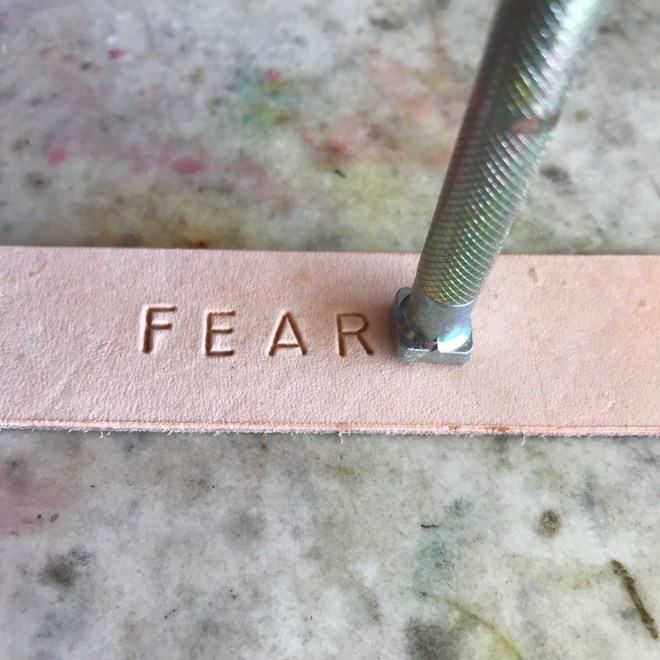
I wet the leather. I pick up a square piece of metal, the letter “F,” and snap it into the handle.

I set the letter carefully in place and hit it hard, just once, with my heavy hammer.

img_3499.jpgI repeat this with each letter, feeling a connection, not only to the person I’m making the leather bracelet for, but to the letters themselves. The sound of the letter, the shape, the history of the words and to the printing press.
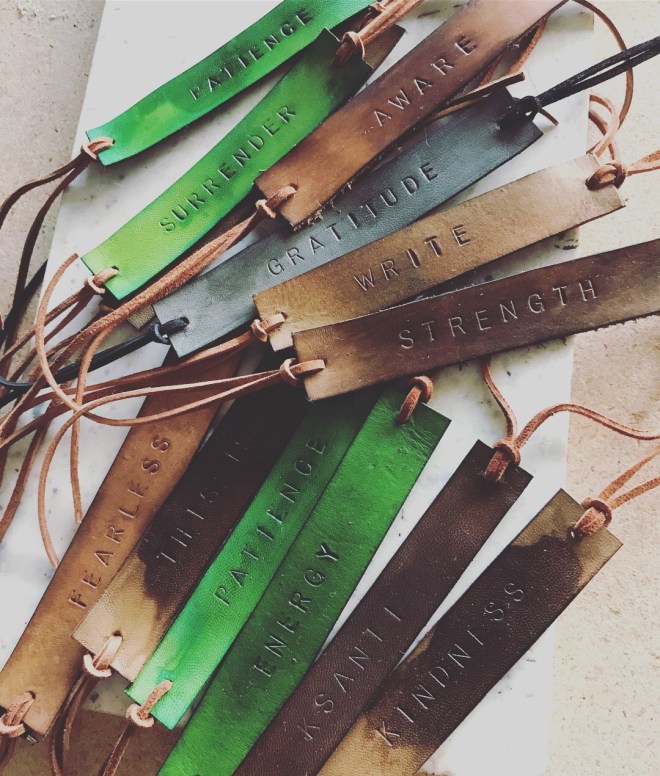
I snap one letter into place after another, developing a rhythm of motion.

Letters become words, and words become phrases.

IMG_3506

IMG_3543Letters become words, words become phrases, and phrases can change the world.
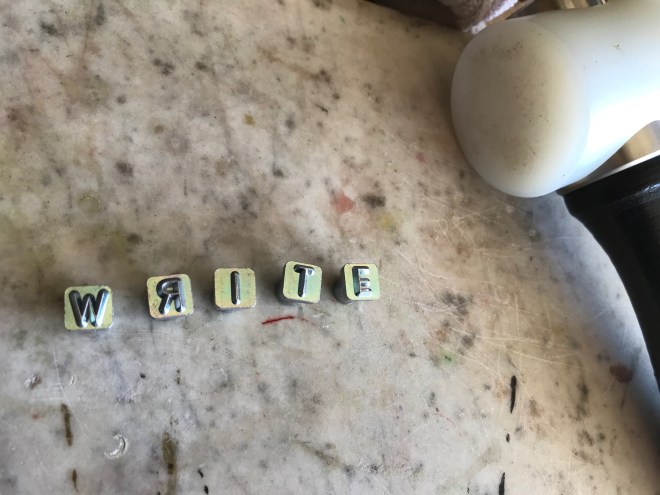
I picture early printers, hunched in a dark room, carefully and secretly placing letters into the bed by candlelight, words designed to topple monarchies, to protest injustice and to fight against oppression. Steady hands, or are they shaking hands, place each metal letter, so similar to the ones I’m snapping on and off the handle, purposefully in place with a full awareness of the risks.

Humbled.

My action is so small. Stamping leather bracelets for friends hardly seems worthy of mention, let alone connected to revolutionaries who changed the world with bold ideas and brave actions.

Yet, we all have to do something. Be something.

We all have to believe little things matter because otherwise, it seems so fucking hopeless, a tiny grain of sand in the ocean being pushed by the tides, a speck of nothing in a vast expanse of universes and black holes.

Our actions matter.

Our suffering matters.

I’ve been consumed with grief, the heartbreaking loss of my tiny baby niece in August and now the end of a close friendship.

I don’t know how to deal with these things.

Sometimes I can’t.

I’ve been unable to write, each time I sit down it feels like the words swirl away from me and leave me fearful and uneasy. I take long baths. I sit silently for hours next to the river, rolling rocks in my hands, and watching birds. Yeah, it’s weird.

Stamping leather has become a way to connect with lost parts of myself and to give back to those who have touched my life. Yeah, it’s weird too.

I’m hopeful the writing will come again (I managed this blog post).

New adventures will be there too, as they always are.

There is nothing revolutionary about any of this.

We all have to reinvent ways to conquer fear, to push away grief and to move forward in life. It’s as universal as eating and breathing, yet it never feels any less suffocating or lonely.

But we aren’t alone.

IMG_3500

Bathing in blue

IMG_3264The bath bomb transformed the water a vibrant blue and I stared at it, silence all around me, searching for something it reminded me of.
The eyes of someone I love.

The sky at dawn near the mountains when the moisture is thick about you.

The hydrangea bushes in front of my childhood friend’s house.

It was then I caught sight of my body below it. Startled, I thought, I don’t know this body.

My wrinkled stomach like a balloon deflated, yet somehow full, was shockingly white. My thighs, covered in dozens of freckles, looked like the skin of my daughter’s back. I had to touch them to see if it was me.

I’m 40 years old, and I feel as if I barely know anything at all. It’s off-putting to feel so unsure of yourself, so undone by your life, so completely and utterly alone.

“You need to stop being so busy.”

“What are you running from?”

I’ve heard these words from my mother and friends for years.

They ask me as if I know.

They look at me as if I can see.

I can’t. I don’t know. I’m not who you think I am.

This is such self-centered bullshit, all of it, this blog, my life, my writing. I’m beating my head against a brick wall praying for it to be a pillow so I can rest. Walking around, moving, moving, moving, always moving, so I don’t feel the truth of it all crush me.

Don’t look at me, but please for the love of God would somebody look at me. I’m more than the chores I do around my house, the books I escape into, the words I write in desperation, the tears I don’t even allow out anymore.

I’m alone in the blue of the water, sinking into nothing, slowly heading toward nothing, but still dreaming and hoping for something.

Interview in the kitchen

IMG_2746Chopped onions, mushrooms and garlic simmer in the pan with a little olive oil. I add a handful of spinach and push everything around with a wooden spoon.
“Here we are in the kitchen of the famous writer,” says my girl.

Wearing her soft white pajamas with gold snowflakes, she points a camera at me and talks in a tumble of quick words, her sweet voice trying to mimic the cadence of the reporters she hears on NPR.

“You may know her from her famous blog, but she is also writing two novels which are sure to be New York sellers.”

She walks closer and I turn, aware of my dirty apron and unwashed hair. The camera is on my face now.

“Can I ask you a few questions?”

“Sure.”

“When you’re famous, will you allow your books to be made into movies?”

“I guess.”

“I know you doubt your acting skills, but if given the chance, would you star in the movie?”

“No. I’d leave it to the professionals.”

“You could, you know.”

“Thanks, but it isn’t something I even want.”

I stare at her through the camera, my tone serious. Teachable moment.

“You do know I may never finish my book, and it may never be published. You know that, right?”

She sighs and smiles.

“You will mom, and you are already famous,” she says. “Because you’re awesome.”

She turns the camera on herself.

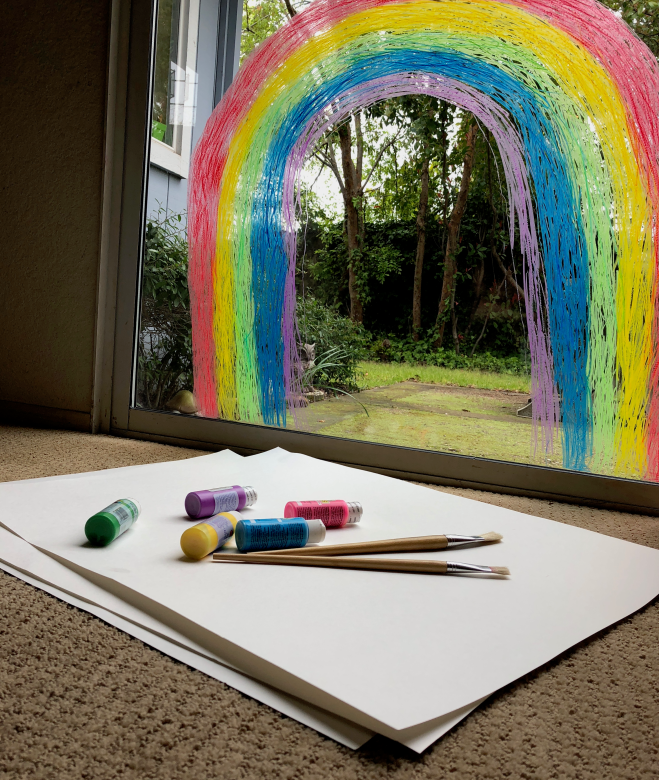
“Well, there you have it, folks. A short interview with the famous writer as she cooks dinner. Tune in tomorrow when we interview a leprechaun about the true secrets of the rainbow.”

She walks into the next room and I hear her playing the video back to herself. I wonder what she is thinking as she watches it.

Does she see the bags under my eyes or the way I cringed when she called me “famous writer”?

Does she know how much I fear I’ll never finish writing anything?

Can she possibly understand the enormous feelings her little interview exploded inside me as I cooked a frittata on a Monday night?

Thank goodness the answer is no. She is 10 years old, all she knows is she loves her mother and she believes I can do anything. I’m still a hero to her, someone to look up to, someone to admire.

Like all aspects of motherhood, it’s crushing, suffocating, messy, confusing and fucking wonderful all at once.

I don’t want to let her down.

I’ve always told her she could do whatever she wants in life.

“You are only limited by your own fears.”

I worry I will fail, and she will watch it, and all her hopes and dreams will crash along with mine. She won’t believe me anymore and I will have broken her.

I worry she will watch the video years down the road, when I am gone, sad her mother never finished those books she always talked about.

She is watching me.

She sees me trying, hears me reading sentences out loud to myself, watches me rush to scribble something on a piece of paper, listens as I tell her something new I figured out about one of my characters and hears me cry when I think I’m alone and everything feels too big.

She is watching me.

Fear and self-doubt, like Oden’s ravens, sit on my shoulders. They mock me, tell me how foolish, stupid and boring I am. Famous writer. Blah.

Yet I keep going.

I’m crafting stories and characters and worlds. It’s hours of tedious work, reworking the same sentences over and over until they read exactly as I want them to, mixed with a tiny moment where the magic sends a shiver through my entire body and I feel life pure and whole and without edit.

I don’t know how this story ends, but she is watching me.

quote


Can we talk?

Her bouncy blonde curls hang wildly down to a soft, mustard-colored sweatshirt. She is smiling, and her blue-green eyes, the light of her face, squint ever so slightly.

We lean close, trying hard to fill the space between us with all the things which have happened since we last sat here, our favorite table in the corner, drinking matching diet cokes and sharing popcorn from a red and white bag.

This is love.

The feeling is big, and yet so simple; connection, familiarity, safety.

Our friendship was forged years ago as young girls trying hard to be seen and heard in a sea of middle schoolers. Something drew us close then, but we seem to have forgotten it, or maybe it lay buried under all the things.

Nearly a year ago, while dodging post-hurricane waves in Florida, our hearts opened up and spilled out to one another. Forged in the powerful surf. Tougher than the wind. We remembered.

We used to borrow each other’s clothes, sing loudly in the car, skip arm and arm down the halls, stay up all night talking about everything and nothing.

I want more.

More of her. More of us. More of the space between women which is sacred and holy and fucking amazing. More time to see her fully, all her complexities and contradictions, hopes and fears, everything.

I want more.

A week ago, I left for a writing retreat to this hippie camp near the ocean and the redwoods. I wanted something to happen, sure, but I feared nothing would. Anxiety, like the proverbial devil on my shoulder, whispering all the ways I would fuck it up.

But I didn’t.

I couldn’t.

Magic became not only attainable, but real; with a fairy path leading to a yurt, a unicorn chef who cooked concoctions worthy of the Gods, and a bonfire where truth was spilled out and passed around from one to the other.

The whispers of the ancients, things I know to be true in my bones, rocked me as I stood every morning on the damp redwood deck in my wool socks, the cool wetness seeping in, a hot cup of coffee clutched tightly in my hands.

The breezes would carry bits of conversation from the women inside, voices of strength and of hope, gathered around a fireplace adorned with candles and trinkets from those who came before. A sense of divine connection filled my soul.

I want more.

Since my return, I’ve dealt with rotten jack-o-lanterns, sick kids spewing mucus and whining loudly, piles of laundry, seven million voices in the carpool van all talking at once; the layers of responsibility trying desperately to bury the ancient truth again under all the shit.

I’m terrified another five, ten, twenty years will pass in a blur before I have another moment of remembering.

I want more.

So, my friends, as I stare at you too long, hold you too tight, forgive me. I’m lost in the redwoods still.

I just want to talk.


IMG_2638

The Magical Place


The poise of a Punk Rock Unicorn

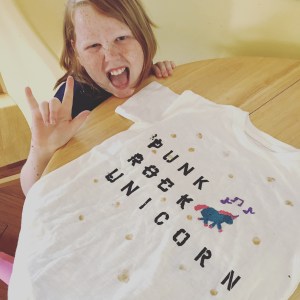
Digging through the bag of fabric paint, she knows exactly what she’s looking for. The body of the unicorn gets turquoise blue in swirling dabs, while the mane, tail and tiny hooves are carefully added with small, precise strokes of bright pink. Next, the horn and three music notes are added in dark purple.

Smiling, she dips a slim brush into a glob of sparkly gold and begins adding dots around the large black lettering of her band name, “Punk Rock Unicorn.”

“This looks so good,” she says.

She doesn’t ask what I think.

She doesn’t worry if her bandmates will like it.

She loves it.

“Can you paint my nails?” she asks. “Some blue and some pink. Oh, and with gold tips!”

I say yes, but I struggle to make it happen. The main color doesn’t reach the edge of every nail, and the gold tips are uneven.

“Sorry,” I say.

“They are perfect,” she says while wiggling her fingers in front of her face. “Thank you!”

It’s time to leave for her band’s show, the culmination of a week of Girls Rock Camp. She is wearing her favorite leggings, a faded swirling galaxy of pink and purple with visible holes in the knees. Her hair isn’t brushed and it’s matted in the back where she slept on it wet.

“Are you sure you don’t want to wear a sparkly skirt and brush your hair? Maybe add some color?”

“I look fine mom,” she says. “I’m comfortable.”

I want to fight her.

I want her to care more about how she looks.

I want her to look more put together.

But there she is, my Punk Rock Unicorn, smiling at me without any hesitation at all, while I changed my outfit several times and still wasn’t happy with my own reflection in the mirror.

This is all I’ve ever wanted for my girl, to be unapologetically herself, to not shrink for anyone, and to rock everything she does without fear or doubt.

Her confident smile is the most beautiful thing I’ve ever seen.

At the show, I watch her and all the girls playing instruments and singing with a reckless joy I don’t know I’ve ever felt in my life.

They are brave, free and strong.

They are working together, not in competition, lifting and rising as one.

I’m so happy for them…until I’m not.

Something inside starts churning up, this voice of perfectionism and criticism.

Why is my girl singing so quietly? She isn’t smiling and doesn’t look as confident as some of the others. Why did she act shy when she was given a compliment? I’m sure it’s my fault, something I’m doing wrong. I’m ruining this perfect girl.

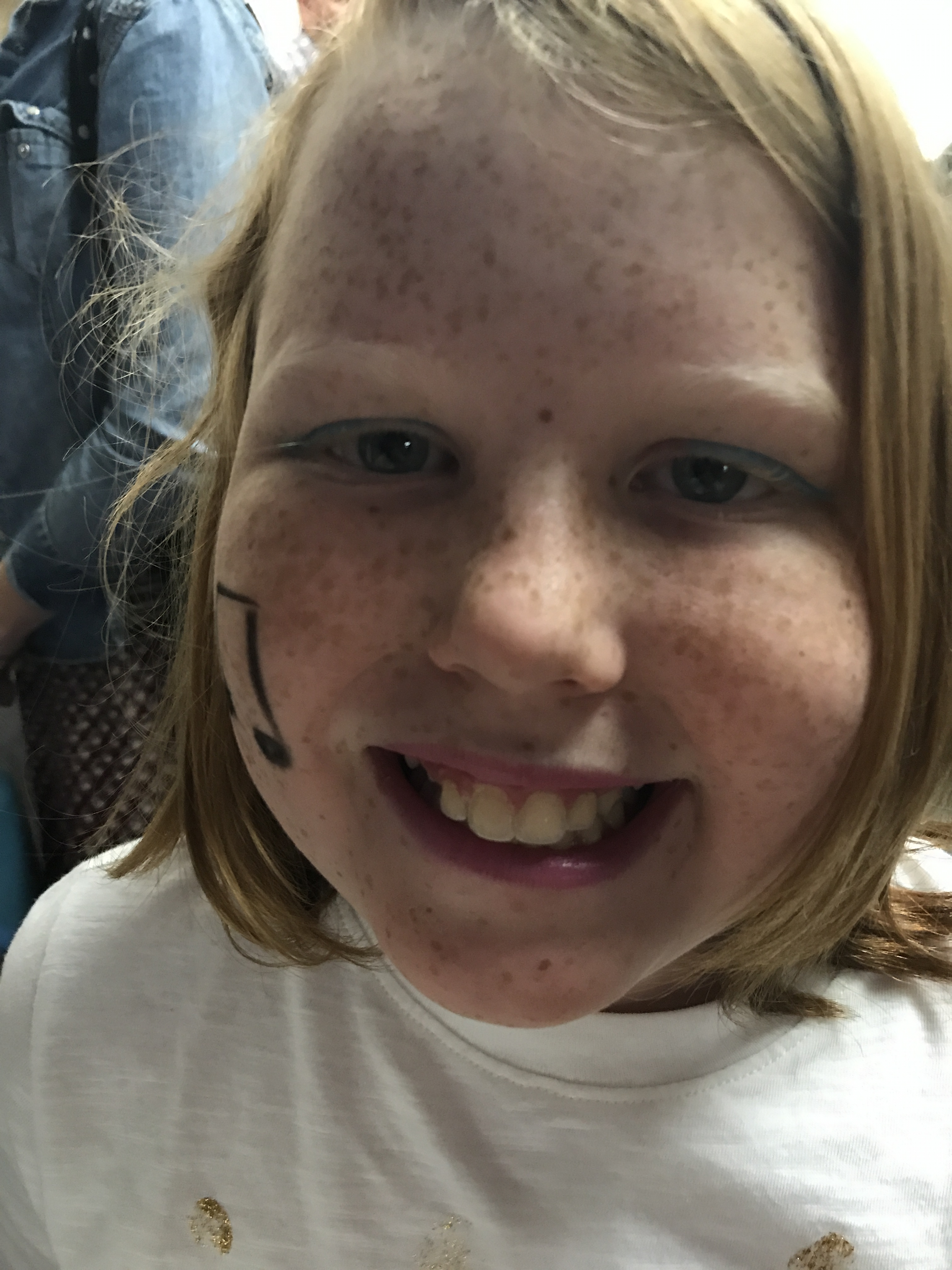
After the show, she runs to me and hugs me hard. She has bright blue eye makeup and sparkly lip gloss her coach put on her backstage. Her arms feel strong and solid.

“Did you have fun?” I ask her.

“Yes!” she says.

“How come you looked so shy up there? Why weren’t you smiling more?”

The words come tumbling out before I can stop them. I recognize this voice, the very same one sabotaging my writing and stopping me from doing anything I might fail it.

Shit.

I don’t want it to be her voice.

I search her face, looking for any trace of damage my words may have caused.

“What do you mean?” she says.

Her face is as radiant as ever.

“I’m very proud of you,” I say. “You really rocked it up there! It looked so fun. I bet you are proud.”

“Thanks,” she says. “I am!”

She melts into me, the warmth of her body like a blanket soothing my critical voices and giving me another chance.

Always another chance.

I remember her plan to have her bandmates and coaches sign her shirt.

“People are starting to leave,” I say. “Did you still want to get signatures?”

“Yes,” she says and runs off to borrow a pen.

I watch her go and make it happen for herself.

Her confidence isn’t loud or boastful, but calm and careful.

She gently taps friends and coaches, asking them to sign her shirt, standing still as they do.

I see many are holding the tiny pink unicorn erasers she spent an hour digging out of the bins in her room, the ones she so thoughtfully brought for them all.

My heart nearly bursts.

This girl is everything.

After the show, we head to dinner and she gives the waitress one of the teeny unicorn erasers, a light pink one with a purple mane and tail.

“Did you see her smile?” she says. “I think she liked it.”

“Yes,” I say. “You make everyone smile, just by being you.”

“Thanks mom.”

*For more information about Girls Rock Sacramento visit http://www.girlsrocksacramento.com


Falling in love by the sea

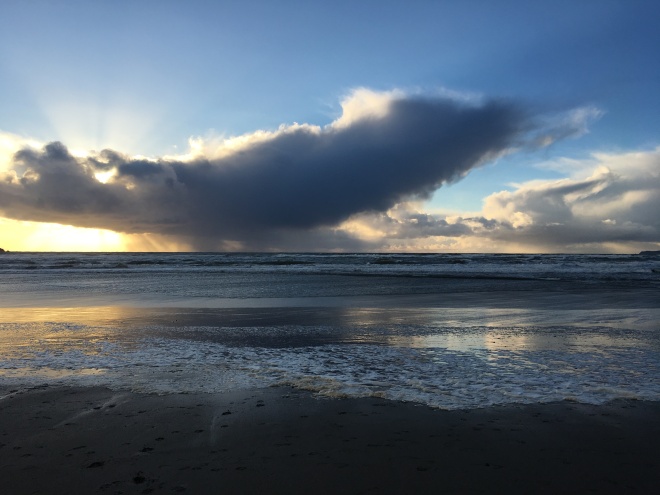
beachShe sits with her back against me, both of us watching the sea in silence. Our breath and hearts remembering the synchronization, falling into pace again.
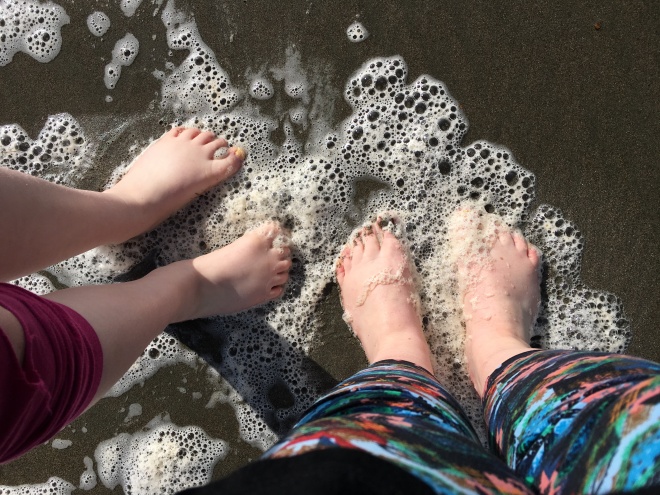
The black rocks bob up and down in the murky grey waves, like seals playing, like we just were; hand in hand darting from the cold foam, testing our footing on crumbling rocks and watching the sand create light circles around our feet as we step together.

The deep, grey clouds mute the color of everything, making even the stark whitecaps of the waves seem wiped away of color.

I put my hand on top of hers, and breathe in the scent of salt caught in the gilded strands.

She’s talking about life, her philosophical nature equally captivated by the waves as my own; motivations, dreams, memories, fears and ambitions.

Our voices match in pace, harmonized.

The clouds gradually shift, the wind gently pushing away the platinum grey, allowing tiny patches of bright blue to appear. With the blue comes white, brown, green and gold. It’s as if nothing is truly a color without the sun’s rays to warm it to life.

Shapes appear far out in the sea, hidden before in the dreariness of grey; black triangular rocks topped with white splashes, golden strips of land carved smooth like rising waves, royal green hills and shiny black birds suspended like kites on a string.

Our tummies growl and I know the moment must end, but I stretch it, savoring the vast warmth as if I may never feel it again.

My baby will be 10 this summer and, as cliché as it is, all those moms who stopped me in Target when my kids were little are right, it does go by so fast.

Chubby pink babies with soft folds you must lift to wash are suddenly explaining why they feel empathy for the mean girl at school with shocking insight and depth.

I feel confused; like I’m Alice shaking my head as the Mad Hatter explains the nature of time, only I’m watching my little baby perform mock episodes of both “Elmo’s World” and “Dance Moms” and wondering where her wit and timing comes from.

She has a feisty resistance to people who don’t listen to her and a sweet devotion to those who do. I see so much of myself in her, but also recognize a strength and determination which is entirely hers alone.

I trace the freckles on her arms as we talk a few more minutes. The sound of the waves, crashing and retracting, the soundtrack to our love.

I know she can’t understand the intensity of my emotions, my devotion. She doesn’t understand why I get irate so quickly when she whines; undone thinking she will have the same negative soundtrack locked in a loop inside her head. I want to shake the pain away from her, make her see only light, only good.

I vow again, silently, like every mother does, to try and be more patient and to do my best to build her up so she can handle the weight of everything to come.

I whisper I love you into her head, and it doesn’t feel like enough. Adore, admire, cherish, treasure; each word like a piece of the puzzle. She can’t know the weight of it, I decide.

She eases off my lap, so I can cook us grilled cheese sandwiches and tomato soup. She begins to sing and my heart is as full as the moon, pulling the waves back and forth, pulling us closer together again.

foam